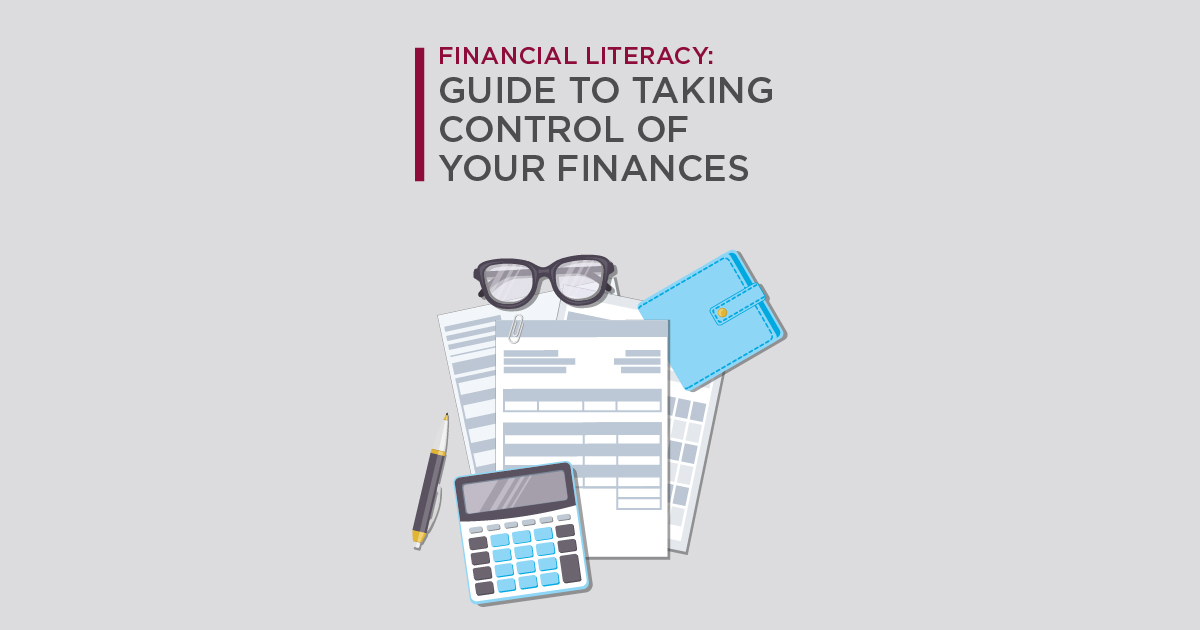
There is a big difference between having money and knowing how to manage it. Financial confidence does not come from a paycheck. It comes from understanding how money works and how to make it work for you.
Millions of Americans never receive a formal financial education. According to the FINRA Investor Education Foundation, only 34 percent of Americans can correctly answer basic questions about interest, inflation, and investment risk. That gap has real consequences, from knowing about high-interest debt and low savings to missed retirement opportunities.
April is Financial Literacy Month. It is your opportunity to change that. Whether you are starting from scratch or sharpening what you already know, this guide walks you through every key area of personal finance with clear steps you can take this month.
What Is Financial Literacy and Why Does It Matter?
Financial literacy is the ability to understand and apply financial skills to real-life decisions. It covers budgeting, saving, managing debt, planning for retirement, and making smart choices about insurance and major purchases.
Financial literacy matters because almost every major life decision has a financial side. Buying a home, choosing insurance, financing a car, and planning for retirement all require financial knowledge to navigate well. Without it, people are more likely to pay more than they need to, take on the wrong kind of debt, or fall short of their goals.
The good news is that financial literacy is a skill. It can be learned and improved at any age and at any income level. Financial Literacy Month, observed every April, is a national reminder that better financial knowledge is always within reach. At Achieva Credit Union, it reflects our commitment to giving members the tools, education, and support they need to make confident financial decisions all year long.
Why April Is the Right Time to Focus on Your Finances
April is a natural time to take stock of your financial life. Tax season is wrapping up. You have a clear picture of your income, deductions, and any refund heading your way. The first quarter is behind you, so you can see how your year is going.
You also have eight months left in the year. That is plenty of time to build new habits, pay down debt, and make real progress toward your goals. The knowledge you gain this April can make a meaningful difference before the year is over.
A Complete Financial Literacy Guide for April
Understanding Your Overall Financial Picture
Before you can make better decisions, you need an honest look at your current situation.
Start by pulling your free credit reports. You can get one from each of the three major bureaus, Equifax, Experian, and TransUnion, at AnnualCreditReport.com. Your credit report shows your borrowing history, payment behavior, and any negative items that may be affecting your score. The Federal Trade Commission estimates that one in five consumers has an error on at least one report. Those errors can lower your score and cost you money on loans. Reviewing your report and disputing any mistakes is one of the most valuable things you can do for your financial health.
Finally, set three specific financial goals for the rest of the year. Vague goals like “save more money” are hard to act on. Specific goals like “build my emergency fund to $5,000 by September 30th” are not. Specificity turns an intention into a plan.
How Budgeting Works and Why It Matters
A budget is one of the most important tools in personal finance. Many people think of it as a restriction, but it is not. A budget is a plan. It tells your money where to go instead of leaving you wondering where it went.
Start by looking at your actual spending over the past 30 to 60 days. Pull your bank and credit card statements and sort every transaction into categories. Be honest about what you find. Most people are surprised by the results. According to a 2024 C+R Research study, the average American spends $219 per month on subscriptions alone, yet most people guess far lower. Identifying and canceling unused subscriptions is one of the easiest ways to free up money right away.
Once you know your spending patterns, build a budget that reflects your current income and expenses. A good starting framework is the 50/30/20 rule. Direct 50% of your after-tax income to needs, rent or mortgage, utilities, groceries, insurance, and minimum debt payments. Put 30% toward wants, dining out, entertainment, and personal spending. Use the final 20% for savings and extra debt payments. Adjust the percentages to fit your situation. The key is that every dollar has a purpose.
Savings and Retirement and Understanding the Fundamentals
Saving for the future is one of the most important financial habits you can build. It is also one of the areas where financial literacy makes the biggest difference.
If your employer offers a 401(k) with a matching contribution, make sure you are contributing enough to get the full match. An employer match is free money. Not capturing it is one of the most common, and costly, financial mistakes people make. In 2025, the IRS contribution limit for a 401(k) is $23,500 for people under 50 and $31,000 for those 50 and older.
The other key concept to understand is compound interest. When you invest, your earnings generate their own earnings over time. The earlier you start, the more powerful this effect becomes. Even small, consistent contributions made early in your career can grow significantly over decades. Waiting to save costs more than most people realize.
For shorter-term savings, consider separating your money into dedicated accounts for specific goals. An emergency fund, a home improvement fund, and a vacation fund should each have their own space. When all your savings are in one account, it is hard to track progress and easy to spend money that was meant for something else.
Also, take time to review the beneficiary designations on your retirement accounts and insurance policies. These designations override your will. An outdated beneficiary, from a previous marriage or before a child was born, can send your assets in the wrong direction. Updating them takes only a few minutes and can prevent serious complications.
Understanding and Managing Debt
Not all debt is the same. Understanding the difference is a core financial literacy skill and one that can save you a significant amount of money.
The most important concept is the true cost of debt. Every dollar you borrow at interest costs more than a dollar to repay. The higher the interest rate and the longer you take to pay it off, the more expensive that debt becomes. Credit card debt at 22 percent interest is far more costly than a mortgage at a lower fixed rate. Many people carry credit card balances for years without fully understanding what they are paying in interest.
Start by building a complete debt inventory. Write down every debt you carry. This includes credit cards, auto loans, student loans, personal loans, and medical bills. Record the balance, interest rate, and minimum payment for each. Seeing everything in one place removes the anxiety of the unknown. It also gives you the information you need to build a smart repayment plan.
Two repayment strategies are worth understanding. The debt avalanche method puts extra payments toward the highest interest rate debt first. This saves the most money over time. The debt snowball method targets the smallest balance first. This builds momentum through quick wins and can help keep you motivated. Both work. The best choice is the one you will stick with.
For homeowners, a Home Equity Line of Credit (HELOC) is one of the most effective tools for managing high-interest debt. A HELOC lets you borrow against the equity in your home at a much lower interest rate than most credit cards. If you are carrying $20,000 in credit card debt at 22 percent, moving that balance to a HELOC at a substantially lower rate can save thousands of dollars in interest.
Insurance: Importance in Financial Literacy
Insurance is one of the most overlooked areas of personal finance. It is also one of the most important. At its core, insurance protects you from financial losses that would be difficult to recover from on your own.
Start by reviewing each policy you carry: homeowners or renters, auto, life, health, and disability. Make sure your coverage still fits your current life. Home values have changed significantly in many markets. A homeowner’s policy that was accurate two years ago may not cover the full cost to rebuild your home today. Check your coverage limits and ask your insurer about a replacement cost review if you are unsure.
Also ask your insurance provider about bundling discounts. Combining your home and auto policies with the same carrier can lower your premiums without reducing your coverage. It is a simple conversation that can save you money right away.
Managing Financial Documents
Financial literacy includes knowing how to protect the documents that matter most. It also means understanding the legal tools that protect your family and your assets.
Keep your financial documents organized and know what to hold onto. Tax returns and supporting documents should be kept for seven years. Bank statements are generally needed for one year. Estate planning documents should be kept permanently. Any document you no longer need that contains personal or financial information should be shredded – not simply thrown away.
Enrolling in paperless statements for your bank and credit card accounts is a smart step. It cuts down on physical clutter and reduces the risk of sensitive information arriving in an unsecured mailbox.
Setting Goals for the Second Half of the Year
Financial literacy has one ultimate purpose: to help you make better decisions that lead to the future you want. Goals give your financial knowledge a direction and turn what you have learned into action.
With eight months remaining in the year, now is the right time to set one to three specific financial milestones for the rest of the year. Make each goal measurable and outline the monthly steps required to reach it.
If home improvements are on your list, plan your financing carefully. Using high-interest credit cards or draining your savings can set back other financial goals. For homeowners who have built equity, a HELOC offers a smarter option, a lower-rate way to fund improvements while keeping your savings and financial plan intact.
How Achieva Credit Union Supports Your Financial Literacy
At Achieva Credit Union, financial literacy is central to our mission. As a local community-driven financial institution, we are here to help members and our local community make informed decisions, not just open accounts.
Home Equity Line of Credit (HELOC): Achieva’s HELOC gives qualifying homeowners a flexible, lower-rate option to consolidate debt, fund home improvements, or handle major expenses. Our team can help you understand how it works and whether it is right for you.
Certified Financial Counselors at Branch Locations: Our Certified Financial Counselors provide free, one-on-one financial guidance at Achieva branch locations. They can help you build a budget, understand your debt options, and plan for major financial decisions.
Make Financial Literacy Month Count This April
Financial literacy is a lifelong practice. Every concept you learn and every informed decision you make builds a stronger financial foundation. Achieva Credit Union is here to help.
Schedule a Free Financial Counseling Appointment at Achievacu.com
Already a member? Log in to your Achieva Checking Platinum Plus account to access financial tools.
Looking to make some smart money moves? Check out our “5 Smart Money Moves to Make in the New Year“. It can help your finances in 2 hours or less.
Financial Literacy FAQs
What is financial literacy?
Financial literacy is the ability to understand and use financial skills to make smart money decisions. It covers budgeting, saving, managing debt, investing, and planning for the future. Financial literacy is a skill that can be built and improved at any age. The stronger your financial literacy, the better equipped you are to make decisions that support your goals.
What is Financial Literacy Month and why does it matter?
Financial Literacy Month is observed every April. It is a national reminder to prioritize financial education and take steps to improve your financial knowledge. Many people never receive a formal financial education. Financial Literacy Month helps bridge that gap by encouraging individuals and organizations to invest in learning.
How can I improve my financial literacy?
Start with the basics. Learn how budgeting, credit, saving, and debt management work, then apply that knowledge to your own financial life. Working with a Certified Financial Counselor is one of the most effective ways to build financial literacy quickly, because it connects general concepts to your specific situation.
I do not feel confident about my finances. Where do I start?
Start simple. Pull your credit report, calculate your net worth, and set one clear financial goal. Then work through the other areas of your financial life one step at a time. You do not need to figure everything out at once.
Article Summary
What is financial literacy? Financial literacy is the ability to understand and apply financial skills, including budgeting, saving, debt management, and planning, to make informed decisions that support your financial goals.
What is Financial Literacy Month? Financial Literacy Month is observed every April as a national reminder to prioritize financial education, build financial knowledge, and take action toward better financial decision-making.
How do you improve financial literacy? Start by learning the fundamentals. Budgeting, credit, savings, debt, and retirement planning. Then apply that knowledge to real decisions in your own financial life. Working with a Certified Financial Counselor and using budgeting tools are among the most effective ways to improve financial literacy quickly.
Achieva Credit Union supports member financial literacy through Certified Financial Counselors at branch locations at no cost, competitive HELOC options for homeowners, and free budgeting tools through online banking.